
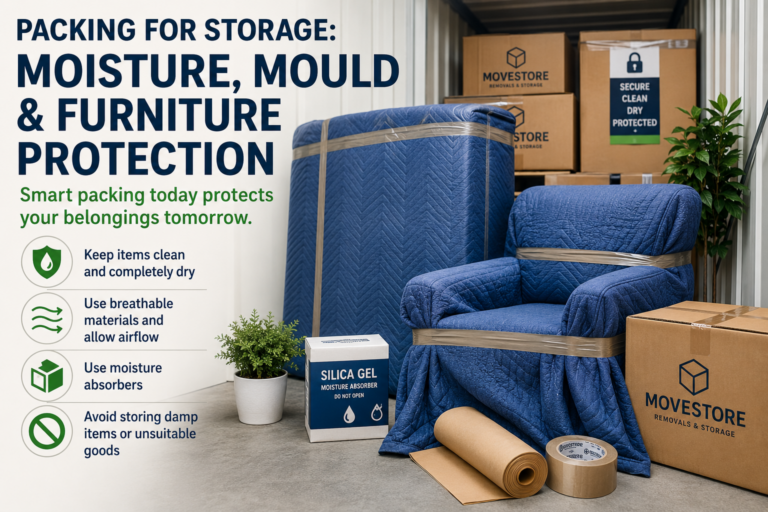
Essential Packing Tips for Storage: Protect Your Belongings from Moisture and Mould
Packing furniture for storage takes more than covering it with plastic and hoping for the best. Items need to be clean and completely dry, with suitable wrapping and enough airflow to prevent trapped moisture from causing mould, odours or surface damage.
This matters when you are moving between properties, renovating or waiting for keys. Edinburgh’s damp and changeable weather can make careful preparation particularly important, especially when belongings are carried through exposed closes or loaded on a wet day.
A good packing plan protects your furniture before it enters storage and keeps it in better condition until you are ready for delivery.
How does moisture damage stored furniture?
Moisture can reach stored belongings in several ways. An item may already be slightly damp when packed, condensation may form when temperatures change, or wet packing materials may be brought indoors during loading.
Once moisture is trapped beneath an impermeable covering, it has little opportunity to escape. This can lead to:
- Mould and mildew on fabrics, timber and leather
- Musty smells in upholstery and soft furnishings
- Swelling, warping or staining on wooden furniture
- Corrosion on metal fittings
- Weakened cardboard boxes
- Damage to veneers, adhesives and painted finishes
Condensation is created when warm, moisture-laden air meets a colder surface. It is the same process that can cause condensation and mould on walls at home. In storage, the risk can increase when items are packed while damp or wrapped without ventilation.
The most effective approach is therefore simple: clean and dry every item, use the right protective materials and avoid sealing moisture inside.
How to pack furniture for storage
The best packing method depends on the furniture’s materials, construction and expected storage period. A solid wooden table needs different protection from a fabric sofa or leather chair.
Follow these steps before placing furniture into storage.
1. Clean everything thoroughly
Dust, food particles and oils can attract pests, create odours and contribute to staining.
Before packing:
- Vacuum upholstery, seams and the undersides of furniture
- Wipe hard surfaces with a suitable cleaning product
- Remove crumbs from drawers and cupboards
- Clean leather according to the manufacturer’s instructions
- Empty and clean appliances if they are being stored
Avoid soaking furniture during cleaning. Use as little moisture as necessary and leave plenty of drying time.
2. Make sure furniture is completely dry
Never pack furniture immediately after cleaning it. Damp fabric, timber or internal padding may feel dry on the surface while still holding moisture underneath.
Open windows where practical and allow air to circulate around each item. Cushions should be removed and dried separately. Drawers and cupboard doors can also be left open during the drying period.
If furniture has been exposed to rain during collection, it should be dried before being wrapped for storage.
3. Dismantle larger items where practical
Taking furniture apart can make it easier to move through narrow Edinburgh stairwells and reduce pressure on joints during handling.
You may be able to remove:
- Table legs
- Bed frames and headboards
- Shelves
- Wardrobe doors
- Sofa feet
- Detachable cushions
- Handles that project from drawers or cupboards
Place screws, bolts and small fittings in labelled bags. Secure each bag to the relevant item or place all fittings in a clearly marked box.
Take photographs before dismantling more complicated pieces. They can make reassembly much easier later.
4. Protect corners, edges and delicate surfaces
Edges and corners are more likely to be knocked during lifting, loading and unloading. Use furniture blankets, corrugated cardboard or purpose-made corner protectors to provide cushioning.
Place an additional protective layer over:
- Glass panels
- Polished surfaces
- Carved details
- Veneered edges
- Mirrors
- Exposed handles and feet
Do not apply adhesive tape directly to wood, leather, fabric or painted finishes. Tape can leave residue or lift the surface when removed.
5. Use breathable coverings
Furniture blankets and clean cotton sheets provide protection while allowing some airflow. They are usually more suitable for long-term furniture storage than wrapping an entire item tightly in ordinary plastic.
Plastic can be helpful as a temporary outer layer during a wet collection or delivery. However, it should not normally be sealed around furniture that contains fabric, timber or natural fibres for an extended period.
Where plastic protection is needed, make sure the item is completely dry and avoid trapping humid air beneath the covering.
What are the best wrapping materials for storage?
Choosing the right materials helps protect furniture from scratches, dust and moisture without restricting airflow unnecessarily.
Furniture blankets
Furniture blankets cushion large items and protect surfaces from rubbing or impact. They are useful for tables, cabinets, wardrobes, bed frames and upholstered furniture.
Secure blankets carefully so they do not slip, but avoid fastening tape directly to the furniture.
Clean cotton sheets
Cotton sheets provide lightweight, breathable dust protection. They may be suitable for items that do not require heavy padding, or as an additional layer beneath a furniture blanket.
Make sure sheets are clean and completely dry before use.
Corrugated cardboard
Cardboard can protect corners, glass and flat surfaces. It is also useful for separating dismantled furniture parts.
Cardboard absorbs moisture, so it should never be used when damp. Avoid placing uncovered cardboard directly on a floor where it could draw in moisture.
Bubble wrap
Bubble wrap provides useful impact protection for glass, mirrors and smaller delicate components. It is less suitable as the only covering for wooden or upholstered furniture because it limits airflow.
For delicate surfaces, place acid-free tissue, a clean sheet or another suitable barrier between the item and the bubble wrap.
Mattress and sofa covers
Purpose-made covers protect upholstery from dust and dirt during handling. Check whether the cover is breathable and make sure the item is dry before it is enclosed.
Avoid storing mattresses flat beneath heavy objects unless the manufacturer recommends it. Long periods under pressure can damage their internal structure.
How to prevent mould in stored furniture
Mould needs moisture, a suitable temperature and an organic surface on which to grow. Removing excess moisture and maintaining airflow can significantly reduce the risk.
Leave space for air to circulate
Do not pack furniture tightly against external walls or press upholstered items together. Small gaps allow air to move around the belongings.
Where the storage arrangement allows:
- Leave space between larger items
- Keep furniture slightly raised from the floor
- Avoid blocking ventilation points
- Do not overfill drawers or cupboards
- Keep cupboard doors slightly open when appropriate
- Store cushions separately rather than compressing them
Good airflow is particularly important for furniture made from timber, fabric, leather and natural fibres.
Avoid placing items directly on the floor
Use clean pallets, shelving or suitable protective supports where available. Raising furniture can protect it from cold surfaces, minor spills and changes in floor-level humidity.
Make sure the supports are stable and distribute the furniture’s weight evenly.
Use moisture absorbers carefully
Silica gel packets and purpose-made moisture absorbers may help manage small amounts of moisture in enclosed boxes or appropriate storage areas.
They should support good preparation rather than replace it. Moisture absorbers will not make wet furniture safe to store, and some products require regular replacement or emptying.
Follow the manufacturer’s instructions and keep chemical moisture-control products away from children, pets and vulnerable surfaces.
Do not create unstable stacks
Overstacking restricts airflow and increases the chance of furniture being crushed or marked.
Place heavier, stable items at the bottom. Keep soft furnishings and fragile furniture away from sharp edges or concentrated weight.
A moisture protection checklist
Before your belongings enter storage, confirm that you have:
- Cleaned furniture and removed food, dust and debris.
- Allowed every item to dry completely.
- Dismantled large furniture where practical.
- Labelled and secured all small fittings.
- Protected corners, edges and delicate finishes.
- Used clean, dry and suitable wrapping materials.
- Avoided sealing damp air beneath plastic.
- Allowed space for air to circulate.
- Raised suitable items from the floor.
- Checked that nothing unsuitable or prohibited has been packed.
Taking photographs of furniture before it is wrapped can also provide a useful record of its condition.
How Edinburgh’s climate affects packing for storage
Edinburgh experiences regular rainfall, cool conditions and periods of high humidity. The city’s traditional tenements can also create practical challenges during collection, including narrow staircases, shared entrances and limited space in which to prepare furniture.
Plan around these conditions by:
- Checking access before moving day
- Keeping entrances and communal areas clear
- Protecting furniture while it is carried outside
- Avoiding leaving wrapped items on wet pavements
- Using clean floor coverings during collection
- Allowing extra time for large items on narrow stairs
- Confirming parking and loading arrangements in advance
Even a short period in heavy rain can introduce moisture beneath furniture coverings. Protective outer layers should be removed or adjusted once the items are under cover so trapped water does not remain against the furniture.
A local removals team can assess stair access, parking restrictions and the safest way to handle bulky furniture before moving day.
Short-term and long-term furniture storage
The basic principles remain the same regardless of storage duration: belongings should be clean, dry, protected and packed with suitable airflow.
Long-term storage requires additional care because small issues can become more serious over time.
For short-term storage
When furniture will be stored for a few days or weeks:
- Protect it against handling damage and dust
- Keep it dry during collection
- Avoid unstable stacking
- Label anything you may need quickly
Short-term storage can be useful when completion dates do not align or decorators need clear access to your new home.
If your completion dates do not line up, read Between Properties: Storage as a Safety Net for Chain Delays for practical ways to keep your move on track.
For long-term storage
For storage lasting several months:
- Use breathable protection for suitable furniture
- Avoid tightly compressing upholstery
- Check whether specialist items need professional preparation
- Keep an inventory and photographs
- Review any manufacturer-specific storage instructions
- Ask how collection and redelivery will be managed
MoveStore’s house contents storage in Edinburgh can support moves where furniture needs to be kept secure between properties, during renovations or for a longer period.
What should not be placed in storage?
Storage providers may have their own prohibited-item policies, so check the terms before packing. Items commonly unsuitable for general household storage include:
- Perishable food
- Open food containers
- Damp or wet belongings
- Flammable liquids
- Gas cylinders
- Explosives or fireworks
- Paints, fuels and hazardous chemicals
- Living plants
- Animals
- Unauthorised weapons
- Illegal goods
- Rubbish or contaminated materials
Important personal documents, medication, jewellery and items you may need at short notice are usually better kept with you.
Fridges, freezers and washing machines must be empty, clean and dry. Appliance doors may need to remain slightly open to prevent odours and mould, depending on the storage arrangement.
What should you do if you find mould?
Do not place a mould-affected item into storage alongside clean belongings. Isolate it and identify the source of the moisture before proceeding.
For a small affected area on a suitable, non-porous surface, follow the manufacturer’s care instructions and use appropriate protective equipment. Porous materials such as upholstery, mattresses and untreated timber can be more difficult to clean because mould may extend below the visible surface.
Consider professional advice when:
- The affected area is extensive
- The item is valuable or antique
- Mould has entered upholstery or internal padding
- The cause of the moisture is unclear
- Someone in the household has asthma, allergies or a weakened immune system
After treatment, the item must be fully dry before it is wrapped or moved into storage.
How MoveStore can help with furniture storage
Packing for storage is easier when the collection, protection and storage arrangements are planned together.
We can talk through the volume of furniture, access at your current property and how long you expect to need storage. This is especially useful when you are moving from an Edinburgh tenement, where stairs, parking and carrying distances can affect the plan.
Your belongings can be carefully loaded into sealed storage containers and kept in a secure, monitored facility until you are ready for delivery. Packing support may also be available where you would prefer trained professionals to prepare and protect larger or more delicate items.
A clear quotation should explain the services included and any factors that may affect the overall cost.
Protect your furniture before it enters storage
Moisture protection starts before the storage period begins. Clean and dry each item, choose breathable wrapping where appropriate and leave enough space for air to circulate.
Careful preparation reduces the risk of mould, odours, warping and surface damage. It also makes collection, storage and redelivery more straightforward.
For help planning your furniture collection and storage, get a no-obligation storage quote from MoveStore.
Frequently asked questions
How do you keep furniture from getting mouldy in storage?
Clean and dry the furniture completely before wrapping it. Use breathable coverings where appropriate, avoid packing items tightly together and allow air to circulate around upholstered and wooden furniture.
What can you put in a storage box to prevent mould?
Silica gel packets or suitable moisture absorbers can help control small amounts of humidity. They should only be placed with belongings that are already clean and dry, and they must be used according to the manufacturer’s instructions.
Should you wrap furniture in plastic for storage?
Plastic can protect furniture temporarily during collection or delivery, particularly in wet weather. For longer storage periods, sealing timber or upholstered furniture in ordinary plastic may trap moisture, so breathable protection is often more suitable.
How can you keep moisture out of a storage unit?
Start by storing only completely dry items. Use suitable containers and coverings, maintain airflow, keep belongings raised from the floor where practical and avoid blocking ventilation.
Can you store furniture immediately after cleaning it?
No. Furniture should be allowed to dry fully before it is wrapped. Upholstery, timber joints and internal padding may retain moisture after the surface feels dry.
How should furniture be prepared for long-term storage?
Clean and dry every item, dismantle larger pieces where practical, protect delicate surfaces and use breathable wrapping. Keep an inventory, label fittings clearly and check any care instructions supplied by the manufacturer.