
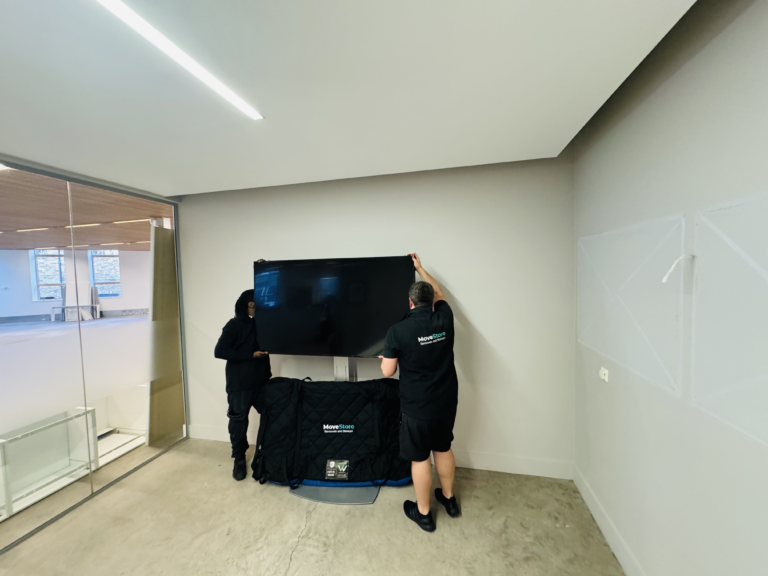
Renovating Your Premises? Temporary Storage for Fit-Out Projects
Renovating an office or commercial premises can create a difficult balancing act. Your contractors need clear space to work, but your team may still need access to furniture, equipment, stock and important documents.
Temporary storage gives you a controlled place to keep items away from dust, damage and day-to-day building work. It can also help you phase the project, maintain business continuity and avoid moving everything several times.
For businesses renovating commercial space in Edinburgh, planning storage alongside the fit-out schedule is particularly important. Restricted access, parking controls and narrow city-centre streets can quickly affect timings if collections and deliveries are not coordinated in advance.
MoveStore provides business storage in Edinburgh alongside commercial removals support, helping businesses plan collections, storage and return deliveries around the needs of the project.
What is temporary storage for a business fit-out?
Temporary storage for a business fit-out is a short-term arrangement that removes furniture, equipment, records or stock from the work area while renovation work takes place.
Items are collected, protected and stored until the relevant part of the premises is ready. They can then be returned in one delivery or brought back in stages to match the fit-out programme.
A typical process involves:
- Reviewing the fit-out schedule and identifying what must be removed.
- Separating essential items from those that can go into storage.
- Creating an inventory and labelling items by room, department or return phase.
- Protecting and collecting furniture, equipment and archive materials.
- Storing items securely for the agreed period.
- Returning them according to the installation and reopening plan.
This approach keeps work areas clearer and gives contractors more room to complete the project safely and efficiently.
Why use temporary storage during an office renovation?
The main benefit is greater control. Instead of shifting furniture and equipment from one part of the building to another, you can remove non-essential items from the premises until they are needed again.
Keep fit-out areas clear
Contractors work more efficiently when floors, corridors and rooms are free from unnecessary furniture and boxes. Clear spaces can also make it easier to manage deliveries, waste removal and the installation of new fixtures.
Temporary storage reduces the need to repeatedly move the same items as work progresses from one area to another.
Protect furniture and equipment
Dust, paint, tools and building materials can put office assets at risk. Even items stored in an unused room may be affected if dust travels through ventilation systems or contractors need unexpected access.
Removing items from the premises provides stronger separation between business assets and renovation activity. Furniture can be wrapped, equipment can be packed appropriately, and vulnerable items can be handled according to an agreed plan.
Reduce disruption to your team
A phased storage plan can help you keep essential departments operating while other parts of the premises are renovated.
For example, one team may temporarily move into a completed area while furniture from the next phase goes into storage. This can be more practical than closing the entire workplace or trying to fit every employee and item into a reduced space.
Support changing project dates
Fit-out programmes can change. Materials may arrive late, additional work may be uncovered or final inspections may take longer than expected.
Flexible short-term storage for refurbishment projects gives you breathing space when the return date moves. It also avoids the pressure to bring everything back before the premises are ready.
Which items can businesses place into temporary storage?
The right storage plan depends on your organisation and the type of renovation. Common items include:
- Desks, chairs and meeting-room furniture
- Filing cabinets and archive boxes
- Retail fixtures and display equipment
- Seasonal or excess stock
- Printers and office machinery
- Marketing materials and exhibition equipment
- Kitchen and staff-room furniture
- Shelving and storage systems
- Non-essential IT equipment
- Tools and operational equipment
Some items need additional assessment before they are moved or stored. Servers, specialist machinery, confidential files and equipment with environmental requirements should be discussed with the storage provider at the planning stage.
How should sensitive equipment and documents be handled?
Sensitive assets need more than a general packing plan. They should be identified early, assigned to a responsible member of the project team and recorded on a clear inventory.
IT equipment
Before computers, monitors, servers or networking equipment are moved:
- Back up important data.
- Confirm who is responsible for disconnection and reconnection.
- Photograph cable arrangements where helpful.
- Label equipment by employee, room or workstation.
- Use suitable protective packaging.
- Keep an inventory of serial numbers and equipment locations.
- Confirm whether any item has specific temperature or handling requirements.
MoveStore can plan the physical handling and movement of equipment with your team and relevant IT specialists. Technical disconnection, data management and reconnection should be completed by appropriately qualified personnel.
Confidential records
Documents containing personal, financial or commercially sensitive information should remain controlled throughout the move.
Use sealed, clearly numbered containers and maintain a record of what has been packed, collected, stored and returned. Access permissions should be agreed before collection so that only authorised people can request particular files or approve their release.
Your organisation remains responsible for its data-protection obligations. Storage and removals planning should support your existing information-security procedures rather than replace them.
Specialist assets
Fragile equipment, prototypes, artwork and calibrated machinery may require custom packing or additional handling arrangements. Share dimensions, weights, values and manufacturer guidance during the survey so the correct approach can be planned.
What are the best storage options during renovation work?
Businesses can choose from several storage arrangements. The most suitable option depends on how often items will be needed, the length of the project and the type of assets being stored.
Containerised storage
With containerised storage, items are loaded into storage containers and kept within a secure facility. This reduces unnecessary handling because goods can remain in their containers until they are required.
It is often suitable for office furniture, boxed records, equipment and items that will not need frequent access during the fit-out.
Self-storage facilities
A self-storage rental unit may suit businesses that need regular direct access to a small number of items. However, you may need to organise transport, loading and unloading yourself.
Before choosing this option, consider whether employees have the time, suitable vehicles and manual-handling support required to move business assets safely.
Phased removals storage
A combined removals storage plan can be useful for more complex fit-outs. Items are collected in phases, stored for different periods and returned according to the renovation programme.
This approach can reduce the number of suppliers involved and give the project manager one clear point of contact for physical collections and deliveries.
Specialist or climate-controlled storage
Some equipment, documents or materials may require stable environmental conditions. Where climate-controlled storage is necessary, confirm the item’s requirements and ask the provider for precise details of the conditions available.
Do not assume that every storage facility offers temperature or humidity control. This should be checked before you book.
How temporary storage can minimise business downtime
Storage alone does not prevent downtime. The benefit comes from integrating collections and return deliveries into the wider fit-out plan.
A practical approach is to divide business assets into three groups:
- Needed throughout the project: Items that must remain accessible or move with the operational team.
- Needed at a known stage: Furniture or equipment that should return when a particular room or floor is completed.
- Not needed until reopening: Items that can remain in storage until the fit-out is complete.
This system helps the removal team understand what goes where and when. It also prevents business-critical items from becoming buried behind furniture that will not be needed for several weeks.
Where the building, landlord and local restrictions allow, collections may be arranged around operating hours. The available schedule should be agreed during planning rather than assumed.
Planning around Edinburgh’s access restrictions
Renovating commercial space in Edinburgh often requires detailed access planning. Historic streets, loading restrictions, controlled parking zones and shared entrances can all affect the removal schedule.
Before work begins, check:
- Where removal vehicles can legally stop
- Whether parking suspensions or permits are required
- Loading-bay operating hours
- Building access and lift availability
- Restrictions imposed by landlords or property managers
- Staircase, doorway and corridor measurements
- Whether contractors will be using the same access points
- Noise or working-hour restrictions
- Space for crates, packing materials and outgoing items
- Who will provide access outside normal business hours
The storage provider, fit-out contractor and building manager should agree responsibilities in advance. This avoids several teams arriving at the same entrance or expecting to use the same lift at once.
How to choose a temporary storage provider
A suitable provider should be able to explain the full process clearly, including collection, handling, storage and return.
Ask the following questions before making a decision.
Can they manage commercial projects?
Business fit-outs require careful scheduling, inventories and communication. Look for relevant commercial removals and storage experience rather than choosing on storage space alone.
How will your items be protected?
Ask what packing materials will be used, how furniture and equipment will be handled, and whether goods will be transferred between different vehicles or storage areas.
What security measures are in place?
Request specific information about the facility’s monitoring, access controls and storage process. The provider should also explain how authorised access or retrieval requests are managed.
Are the storage terms flexible?
Fit-out dates can move. Check how extensions are handled, how much notice is needed for redelivery and whether partial returns can be arranged.
What does the quotation include?
A clear quotation should show the services being provided. Depending on the project, this may cover:
- Packing materials
- Packing support
- Collection
- Labour
- Storage
- Inventory preparation
- Redelivery
- Furniture disassembly or reassembly
- Additional handling for specialist items
Avoid comparing providers only by the price of a storage rental unit. Transport, staff time, repeated handling and return-delivery arrangements can have a significant effect on the overall cost.
What insurance arrangements apply?
Ask for written details of the insurance associated with the removal and storage service, including relevant limits, conditions and exclusions. High-value or specialist assets may need to be declared in advance or covered through separate arrangements.
A temporary storage checklist for fit-out projects
Use this checklist before your first collection.
Six to eight weeks before work starts
- Confirm the renovation phases and expected completion dates.
- Identify furniture, equipment, records and stock to be removed.
- Arrange a survey with your removals and storage provider.
- Review building access, parking and loading restrictions.
- Assign responsibility for IT equipment and confidential records.
- Decide which departments or services must remain operational.
Two to four weeks before collection
- Finalise the asset inventory.
- Confirm packing and labelling responsibilities.
- Agree the collection sequence.
- Book lifts, loading bays and contractor access.
- Share contact details for the project manager and site representatives.
- Confirm insurance requirements for high-value items.
- Prepare a contingency plan for programme changes.
Immediately before collection
- Complete data backups.
- Separate items that must remain on site.
- Label everything by department and return phase.
- Secure confidential files in numbered containers.
- Photograph specialist equipment where appropriate.
- Confirm the collection time with the building manager and contractors.
- Provide the removal team with an authorised inventory.
Before items are returned
- Confirm that the relevant areas are complete, clean and accessible.
- Check that flooring, lifts and entrances can accept deliveries.
- Issue an updated placement plan.
- Confirm which items should remain in storage.
- Arrange for IT or specialist contractors to attend where needed.
- Give employees clear instructions about the reopening sequence.
Common temporary-storage mistakes to avoid
Booking too late
Leaving storage arrangements until the fit-out begins can limit your options. It may also result in rushed packing or collections that clash with contractors.
Storing essential items behind non-essential furniture
Plan the loading order around the return schedule. Items needed first should be clearly identified and accessible.
Using vague labels
Labels such as “office” or “miscellaneous” are rarely detailed enough. Use the department, room, asset type and return phase.
Failing to check environmental requirements
Do not place sensitive materials into general storage without confirming whether temperature, humidity or other conditions matter.
Overlooking Edinburgh access arrangements
Parking and loading restrictions can disrupt an otherwise well-planned collection. Confirm permissions and access before the vehicle arrives.
Treating the return as a single final delivery
A phased return may be more efficient. Bringing back only what each completed area needs can prevent new furniture and equipment from obstructing the remaining work.
Relying on verbal agreements
Record collection dates, responsibilities, access requirements and return instructions in writing. A shared plan reduces uncertainty when several suppliers are involved.
Using storage as part of the fit-out project plan
Temporary storage works best when it is treated as part of the renovation programme rather than a separate last-minute purchase.
Your fit-out contractor, internal project lead, IT team, building manager and removals provider should work from the same key dates. Each party should understand:
- What is leaving the premises
- Who is responsible for preparing it
- When it will be collected
- How it will be identified
- How long it is expected to remain in storage
- Who can authorise its return
- Where it should be placed when it comes back
- What happens if the renovation schedule changes
A named contact on both the client and service-provider sides helps keep decisions clear. Regular updates are particularly useful when the work is being completed in several phases.
How MoveStore supports office renovation projects
MoveStore combines commercial removals support with secure containerised storage. We can plan the physical movement of furniture, equipment, boxed records and other business assets around your renovation programme.
The process begins with a survey and a discussion about your premises, access, project stages and storage requirements. From there, we can prepare a clear collection and return plan tailored to the fit-out schedule.
Our team can help with:
- Planning collections around the renovation phases
- Supplying appropriate packing materials
- Protecting and handling office furniture and equipment
- Loading items into sealed storage containers
- Keeping goods in a secure, monitored facility
- Maintaining clear labelling and inventories
- Arranging phased or final return deliveries
- Adapting the storage period if project dates change
We use purpose-built packing and moving materials to protect items during handling. Route planning also helps us avoid unnecessary mileage while working around Edinburgh’s access requirements.
For more information about the available service, visit business storage in Edinburgh.
Related business storage guidance
- Stock Overflow Storage for E-commerce and Retail
- Business Continuity During a Relocation: Staging and Phased Moves
Plan temporary storage around your fit-out
A well-planned storage arrangement can keep work areas clear, protect business assets and make each stage of an office renovation easier to manage. The key is to organise it early and connect every collection and return delivery to the main fit-out programme.
MoveStore can assess your premises, access requirements and project dates before recommending a suitable removals and storage plan.
Get a quote for temporary business storage during your office renovation.
Frequently asked questions
What are the benefits of temporary storage during office renovations?
Temporary storage keeps furniture, equipment and documents away from dust and building work. It also creates clearer working areas, supports phased renovations and reduces the need to repeatedly move items around the premises.
How can temporary storage reduce business downtime?
Items can be collected and returned according to the fit-out schedule. This allows essential departments to continue operating while non-essential furniture and equipment remain safely out of the way.
What should a business consider when choosing a storage provider?
Consider the provider’s commercial experience, security arrangements, handling process, insurance terms and ability to support phased collections or deliveries. The quotation should also make clear which services and charges are included.
Does every provider offer climate-controlled storage?
No. Businesses with items that require particular temperature or humidity conditions should confirm their requirements with the provider before booking. Ask for specific details rather than assuming that climate control is included.
How should confidential documents be prepared for storage?
Place confidential documents in sealed, numbered containers and maintain an inventory. Agree who can authorise their collection, access and return, and ensure the process follows your organisation’s data-protection procedures.
What access issues affect commercial renovations in Edinburgh?
Common issues include restricted loading times, controlled parking, narrow streets, shared entrances and limited lift access. These details should be checked with the building manager and included in the collection plan.
How early should temporary storage be arranged?
Arrange a survey as soon as the fit-out programme is reasonably clear. For many projects, beginning discussions six to eight weeks before the first collection gives the teams time to assess access, prepare inventories and coordinate with contractors.
Can items be returned in stages?
Phased returns can often be planned where the project, storage arrangement and access conditions allow. This is useful when different rooms, floors or departments are completed at different times.